-13%

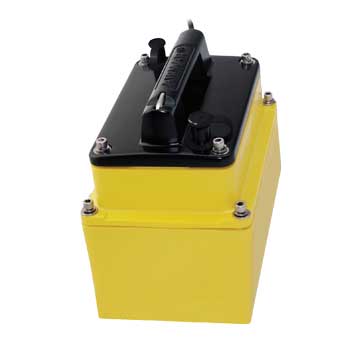
Raymarine M265LM Chirp Transducer

Faq
Any questions about this product?
You'll find the answers you're looking for HERE
€ 2.514,00 € 2.891,40 -13%
RAYMARINE M265LM CHIRP TRANSDUCER
1kW indoor transducer


Frequencies: Low: 40-75khz - Medium: 80-130khz

M265LH In-Hull Transducer
Depth
In Hull
Hull deadrise = 0º to 25º
CP450C Plug on Cable
Urethane
Frequency: L=42-65 kHz, H=80-130 kHz
Power: 1kW
Low: 25 to 16 degree beamwidth
High: 10 to 6 degree beamwidth
Hull type: fiberglass only
Product Number: A80038


Factors to consider when choosing a transducer

To determine the transducer best suited to your needs, consider the following factors:

Material

The first point to determine is the material the transducer is made of.
The plastic transducer is recommended for fiberglass or metal hulls.
The stainless steel transducer is recommended for aluminum or steel hulls.
The bronze transducer is recommended for fiberglass or wooden hulls.

Expanding wood can damage plastic transducers and cause a leak. Installing a stainless steel transducer in a metal hull requires the use of a fairing, available from your dealer.


DO NOT install a metal transducer on a positive ground vessel.

Mounting type
The type of assembly is also very important.
Thru-hull transducers with fairing blocks offer the best performance, especially at high speeds.
Thru-hull transducers are ideal for towing vessels where good performance is required and there are no protrusions from the hull.
Internal transducers are fixed directly inside the hull but performance is slightly reduced.
Transducer output power

Output power refers to the intensity at which the transducer sends signals expressed in watts RMS.

Higher power increases the chances of obtaining returns in deep water or poor visibility. It also allows you to see more detail, such as small fish and structure.
Typically, the higher the power, the greater the depth you can reach, as well as achieving maximum target separation by eliminating surface clutter.

Frequency
The accuracy with which the fishfinder locates the bottom and other objects is also determined by the frequency selected based on depth. Raymarine depth transducers have two frequencies: LOW or HIGH .

HIGH
The high frequency is used for shallow water and is used to obtain more accurate readings at high speeds. When using this frequency, the transducer scans a smaller area but displays greater detail. Typically, fewer unwanted echoes and less clutter are displayed, resulting in greater target definition.

LOW
This frequency is used in deep waters. Water absorbs ultrasonic pulses at a slower rate, and larger areas can be covered before the signal becomes too weak. This results in a wider cone angle, allowing for a larger portion of the seabed to be scanned. However, this also means less definition and target separation, and more noise. While low frequencies allow for deeper exploration of the water column, they can also result in a less clear image of the seabed.

In general, you should use the high frequency for a detailed image in shallow water and then switch to the low frequency for greater depths. The ideal solution is to display both frequencies on a split screen.

Angles of the cone
The transducer focuses the transmitted waves into a beam. In theory, the pulses are radiated in a cone that widens as the depth increases. In reality, the beam shape varies depending on the transducer, and the pulses are typically also radiated outward, thus producing sidelobes. The following figures show a representation of the actual path taken by the pulses.

Low frequencies have a wider beam angle than high frequencies
However, for our purposes, we'll consider the image of a cone. The signal is strongest along the centerline of the cone and gradually decreases as we move away from the center. Wider angles show a larger portion of the seabed, but at the expense of resolution because they disperse the transmitter's power. A smaller cone can concentrate the transmission power more in a smaller area. Cone angles are wider at low frequencies and narrower at high frequencies.
In summary, a wider beam can detect not only fish directly under the boat but also surrounding fish, but with less target separation. A narrower beam focuses the transmitted energy to more precisely locate small details, such as fish or bottom structure, but scans a smaller portion of water.

For more information: www.raymarine.it

D E compatibile con cp570 raymarine
R 02/12/2025 Buonasera, sì certo confermo la compatibilità, compatibile anche con CP470. Cordiali saluti. Luigi Bianchi
Our strength: complete and reliable solutions.
Design
Design

Clear diagrams for easy installation.

Consulting
Consulting

Equipment suited to your needs.

Realization
Realization

High quality systems.

Do you need help?
Do you need help?

Guaranteed after-sales support.

Don't lose your way!
Subscribe to our free newsletter.
REGISTER
REGISTER