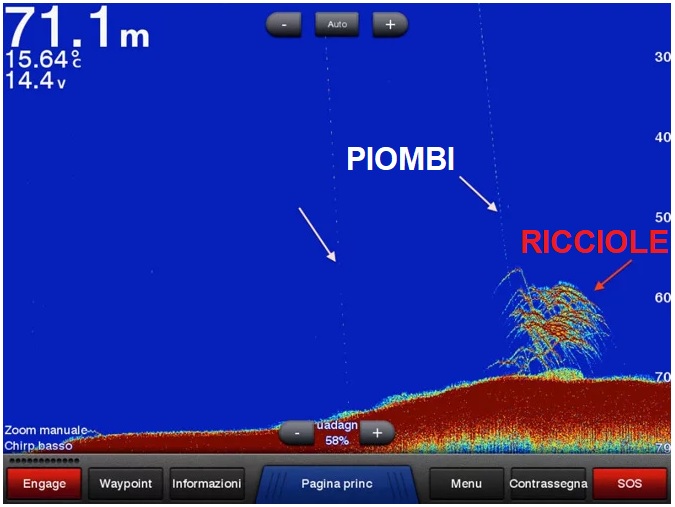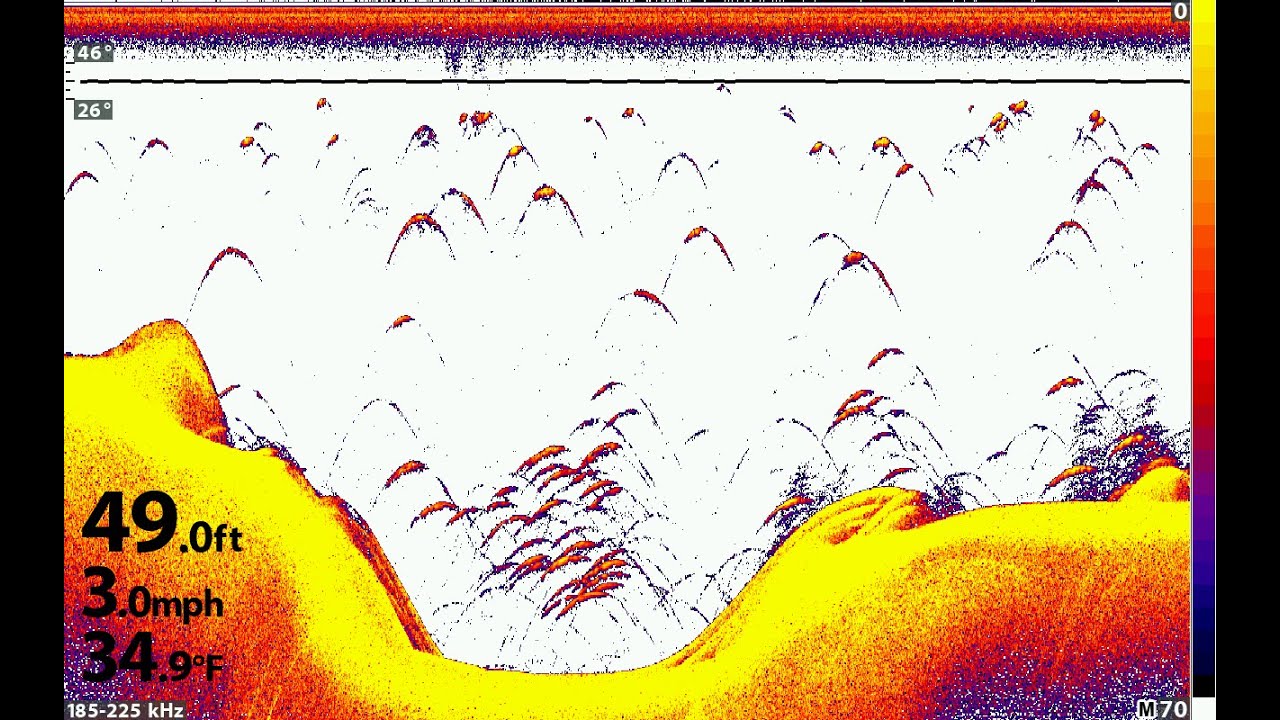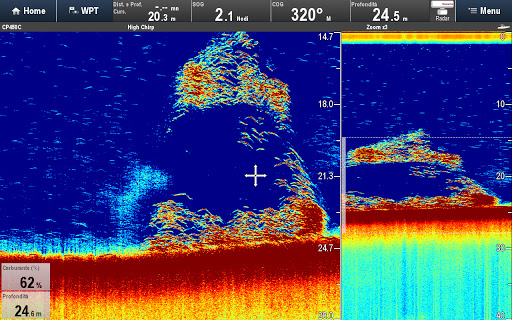
CHIRP (Compressed High Intensity Radar Pulse) technology has been used by the military, geologists and oceanographers since the 1950s. Finally, CHIRP technology is now available for sport fishing, recreational fishing, and other uses at an affordable price.
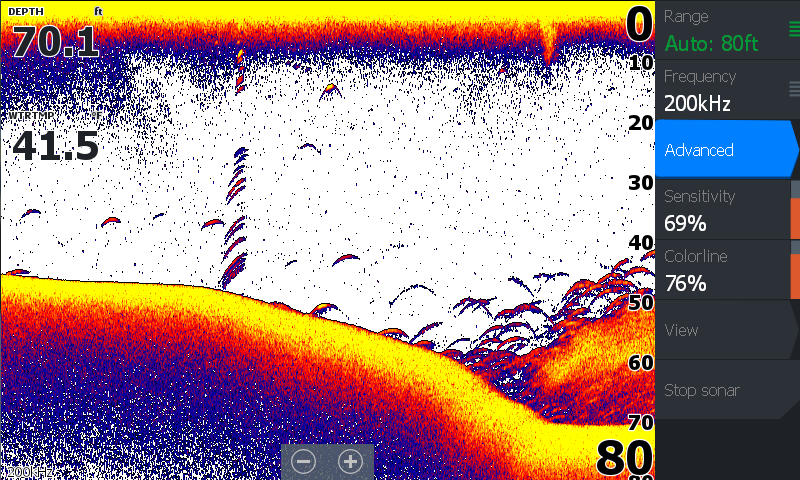
Let's analyze the differences between single-pulse echo sounders, therefore 50 or 200khz or frequency-scanning Chirp.
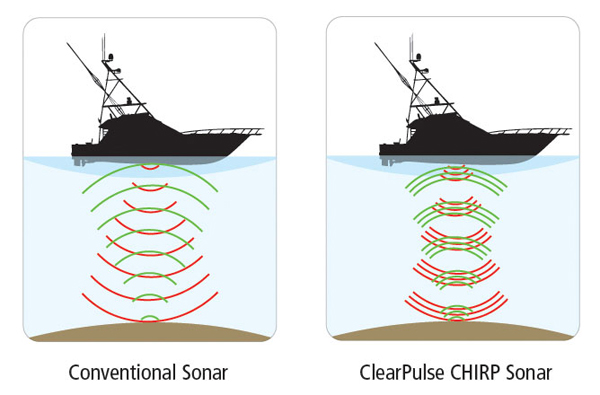
In conventional echo, the transmit pulse is only at a discrete frequency. • Conventional dual frequency fish finders send the waveform at only one frequency. • If you use a single low frequency pulse (50kHz), you will lose resolution. Multiple fish will get lost in the long pulse and cannot be distinguished.
CHIRP transducers, on the other hand, use a precise scanning pattern with many frequencies (i.e., 28-60 kHz, 80-160khz, 130-210 kHz etc.) It requires a long-duration transmit pulse to sweep across all frequencies. To send a CHIRP pulse, the transducer MUST HAVE THE NECESSARY BANDWIDTH. This leads to better image quality, improved target separation and greater depth penetration.
Benefits for you... • Long transmission CHIRP pulse transmits more energy into the water column, up to 10-1000 times more energy on the target! • It will get different echo returns from all based on the transmitted frequencies, which are then processed and shown on the display.
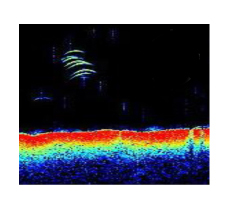
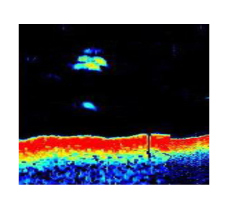
conventional echo CHIRP echo
We talked before that the transducer MUST HAVE THE NECESSARY BANDWIDTH, so this then actually has to be found among the various transducer manufacturers. For example: Arimar produces Chirp transducers with different bands, among the most popular: TM150 (99-155 khz); B75 or B175 divided into: Low (40-60khz) Medium (80-130khz) High (130-210khz), finally certainly the most renowned and most expensive 1kW B265 LM (freq. 42-65Khz and 80-130khz) or LH (freq. 42-65khz and 130-210khz) Garmin GT15 (85-165 kHz); GT23 (80-160kHz); GT22 (150-240kHz) Lowrance and Simrad, unlike everyone else, are divided into Low Chirp (reference frequency close to 50khz), Medium Chirp (reference frequency close to 83khz) and High Chirp (reference frequency close to 200khz). Humminbird DS (140-200khz) or (180-240khz) Raymarine instead only in High Chirp near 200khz
Up until now, we've only briefly discussed the Chirp features in the standard 2D Fishfinder version. We refer you to the next article, which explains the various display modes that modern fishfinders are capable of offering. Chirp is often confused with Down Vision, Down Scan, ClearVù, and Side Vision functions.
To conclude, and to further clarify what Chirp technology can offer, I always remember a few years ago at a meeting where Chirp was compared to music. Think of a piano: hold down a single note, say a C, for a long time, and then think of that note fading over time. Imagine, however, composing a piece with several chords and several notes at the same time, and the result will be very different!